
You have found a star-shaped screw, your Torx key will not go in, and a closer look shows a small pin standing in the middle of the recess. That is security Torx - and this guide covers what it is, how to identify it against the other tamper-resistant fixings it gets confused with, how to drive it properly, and what not to do to it.
What security Torx is
Security Torx - also sold as tamperproof Torx, pin Torx and anti-tamper Torx - is the standard six-lobed star recess with one addition: a pin in the centre of the socket. A solid Torx key cannot enter because the pin blocks its tip. The screw itself is otherwise ordinary, which is the design's elegance: it installs with the same torque and holds with the same strength, but resists removal by anyone who arrived without the right tool.
That is why it guards things installed in public or left unattended: playground and sports equipment, washroom fittings, signage, electrical enclosures, vehicle interior electronics, machine guards and appliance casings. Anywhere a manufacturer or installer wants a fixing to stay fixed, the pin buys them that.
How to drive it: the key with the hole
The counterpart tool is a Torx key with a hole bored into the tip. The hole clears the pin, the lobes engage the star exactly as normal, and the screw drives with full torque. Two details worth knowing when choosing the tool:
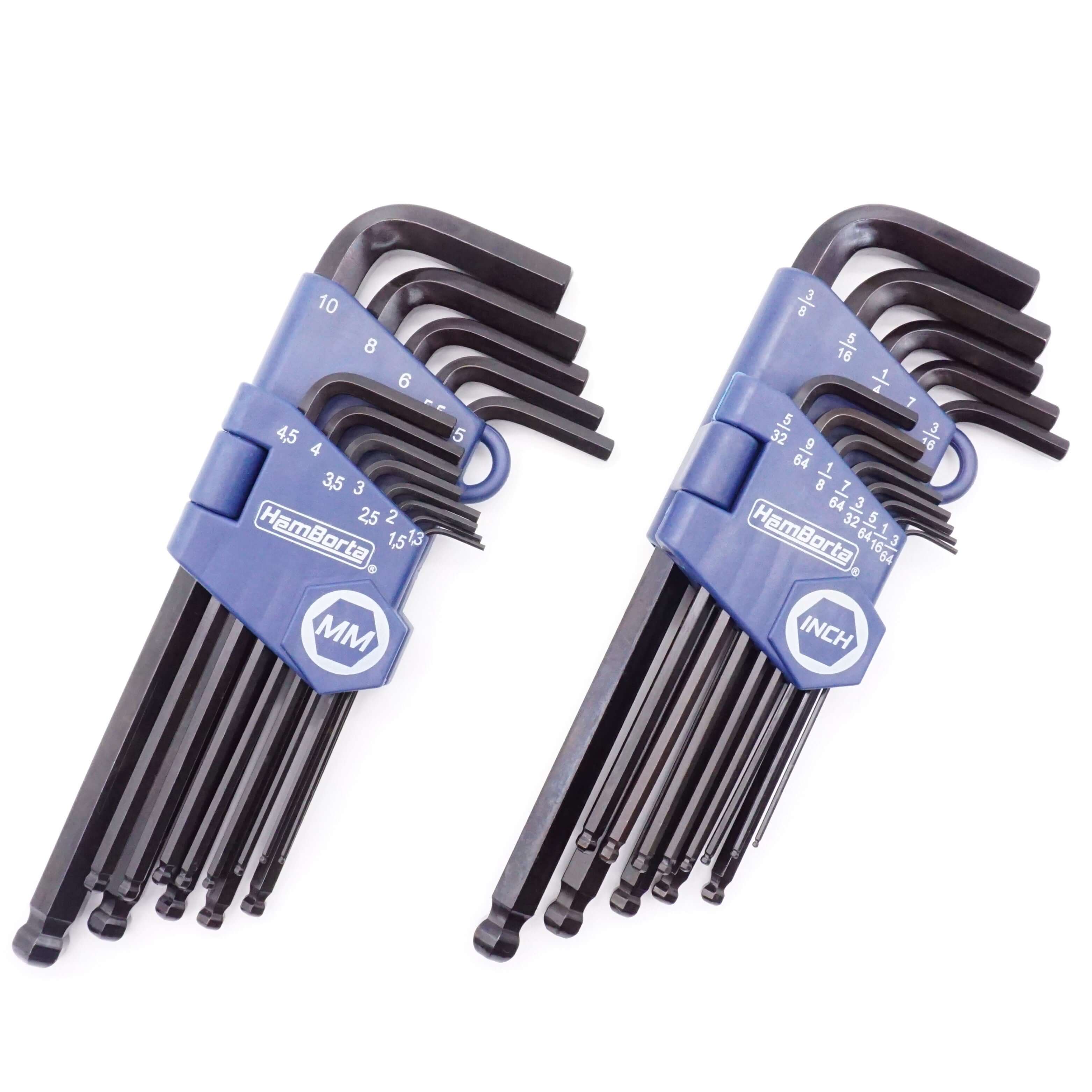
A security key drives standard Torx too. The hole makes no difference in a pinless recess, so a security set replaces a standard set entirely - there is no reason to own both. Every key in a HemBorta Torx set carries the security hole for this reason.
Check both ends. Some security keys carry the hole on one arm only, which means the screw dictates which arm you use rather than the space around it. HemBorta keys bore the hole on the short and long arm both, so a pinned screw in a tight spot can still be driven from whichever arm fits - the same choice you would have on any ordinary screw.
Identifying security Torx against its lookalikes
Several tamper-resistant fixings get called "security screws" interchangeably, and the wrong tool fits none of them. A one-glance guide:
| Fixing | What you see | Tool that drives it |
|---|---|---|
| Security Torx | Six-lobed star with a centre pin | Torx key with bored tip (this guide) |
| Standard Torx | Six-lobed star, no pin | Any Torx key, security or solid |
| Torx Plus security (IP) | Five lobes with centre pin (note: five, not six) | Dedicated IP security driver only |
| Pin hex | Ordinary hex socket with a centre pin | Hex key with bored tip - not a Torx tool |
| Spanner / snake-eye | Two small round holes | Two-pin spanner driver |
| One-way | Slotted, but slopes shed the blade anticlockwise | Installs with a flat blade; removal needs extraction tools |
The five-lobe check matters most: security Torx Plus looks close enough to security Torx that people buy the wrong set. Count the lobes before you buy the tool.
What size is it?
Security Torx follows the same T-scale as standard Torx, and in the field it concentrates in the T10-T50 range - T10 to T20 on trim, casings and electronics, T25 and T27 on public fittings and appliances, T30 to T50 on machine guards and structural fixings. Measure the star point to point and read it against a Torx size chart, or simply offer up keys from a T10-T50 set until one seats without play - the correct size clicks home with no rattle.
What not to do
Do not jam a flat screwdriver into the lobes. It occasionally shifts a lightly-torqued screw and reliably destroys the recess of anything tighter, converting a thirty-second job into an extraction.
Do not snap the pin out. It is sometimes possible with side-cutters or a punch, and it ruins the fixing's security permanently, leaves a work-hardened stub that fouls the proper key, and scatters a hardened fragment at eye height. The correct key costs less than any of those outcomes.
Do not drill as a first resort. Drilling is the last resort for a damaged recess, exactly as with a rounded hex socket - and the escalation ladder in our rounded bolt removal guide applies to a chewed Torx recess in the same order.
And the obvious one, stated once: security fixings on property that is not yours are pinned for a reason. This guide is for owners, trades and maintainers with the right to undo what they are undoing.
Choosing a security Torx set
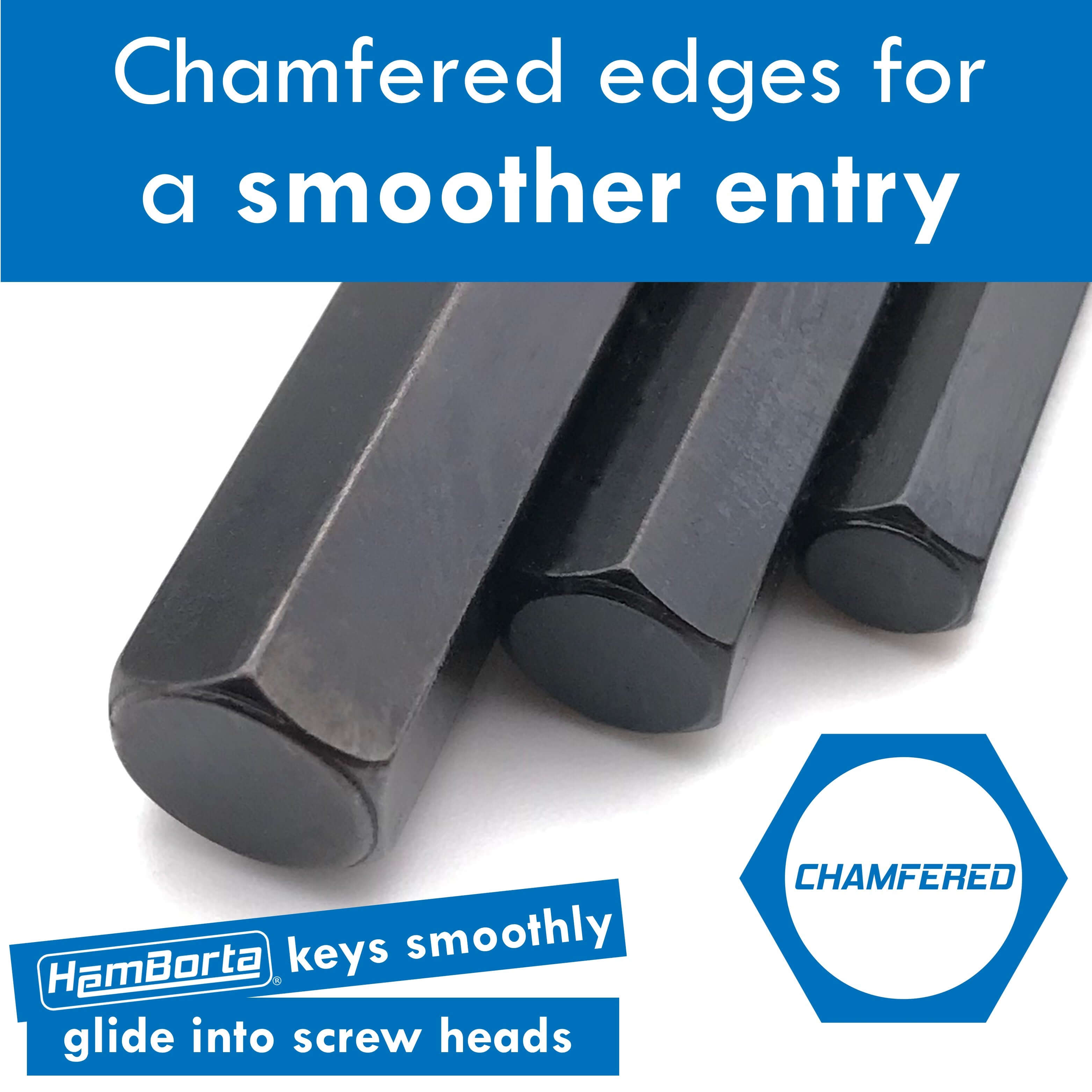
Four things separate a set that lasts from a market-stall one: holes on both arms of every key, so the screw never dictates your approach angle; heat treated chrome vanadium steel, because the bored tip concentrates stress and soft keys twist there first; chamfered tips that find the star cleanly - pinned recesses are often installed somewhere you are working blind; and honest sizing across T10-T50, which covers effectively everything outside precision electronics. Arm length is then about your work: short arms for tight clearances, long arms in satin or black oxide for the everyday bench, extra long for deep housings.
Frequently asked questions
Will a security bit set do the same job? For a driver or impact tool, yes - bits suit power and speed. L-keys win on access (they work at angles and in recesses a driver body cannot enter) and on leverage for seized screws. Most workshops end up with both; the keys get reached for more often.
Can I install security Torx screws with a standard key? No - the pin blocks installation exactly as it blocks removal. Fit them with the security key from the start.
Why did my security key stop fitting anything? Check the bored tip: on soft keys the thin walls around the hole spread with use until the key sits proud of the pin. That is wear, and it is the strongest argument for heat treated steel in exactly this tool.
All HemBorta security Torx key sets are available on Amazon; each product page on this site links straight to the listing for your marketplace.