
A rounded hex socket is one of the workshop's most infuriating failures: the screw is intact, the threads are fine, and nothing will grip it. This guide works through removal methods in order of escalation - start at the top and stop as soon as the bolt moves - then covers why sockets round in the first place, because every rounded bolt was preventable.
First, understand what you are dealing with
A hex key drives a bolt through six flat contact faces. Rounding happens when the key contacts only part of those faces - a slightly wrong size, a worn tip, partial insertion, or torque through a ball end - and the corners of the socket shear into a cone. Each failed attempt makes the crater rounder, so the order of operations matters: begin with the least destructive method and only escalate when the current one has genuinely failed.
Method 1: the correct key, seated properly
Obvious, but it rescues more bolts than anything else. Clean the socket out first - paint, corrosion and packed dirt stop keys seating fully, and a half-seated key is how sockets round. Pick out debris with a scriber, seat the key with a firm push (tap it home with a soft mallet if needed), press in hard, and turn with slow, steady force. A jerk cams the key out; sustained pressure keeps it biting. If the bolt is corroded in place, a drop of penetrating oil and ten minutes of patience beat force every time.
Method 2: try the other measurement system
The metric-imperial near misses that cause rounding also cure it. If a 5mm key spins in its socket, a 3/16in key (4.76mm) may still bite what is left; a worn 8mm socket will sometimes yield to a 5/16in (7.94mm) driven in firmly. This is the one situation where the almost-fit is your friend - the slightly-different size finds fresh metal the original key has stopped reaching. A set covering both metric and imperial doubles your options on every damaged socket.
Method 3: hammer in an oversize Torx key
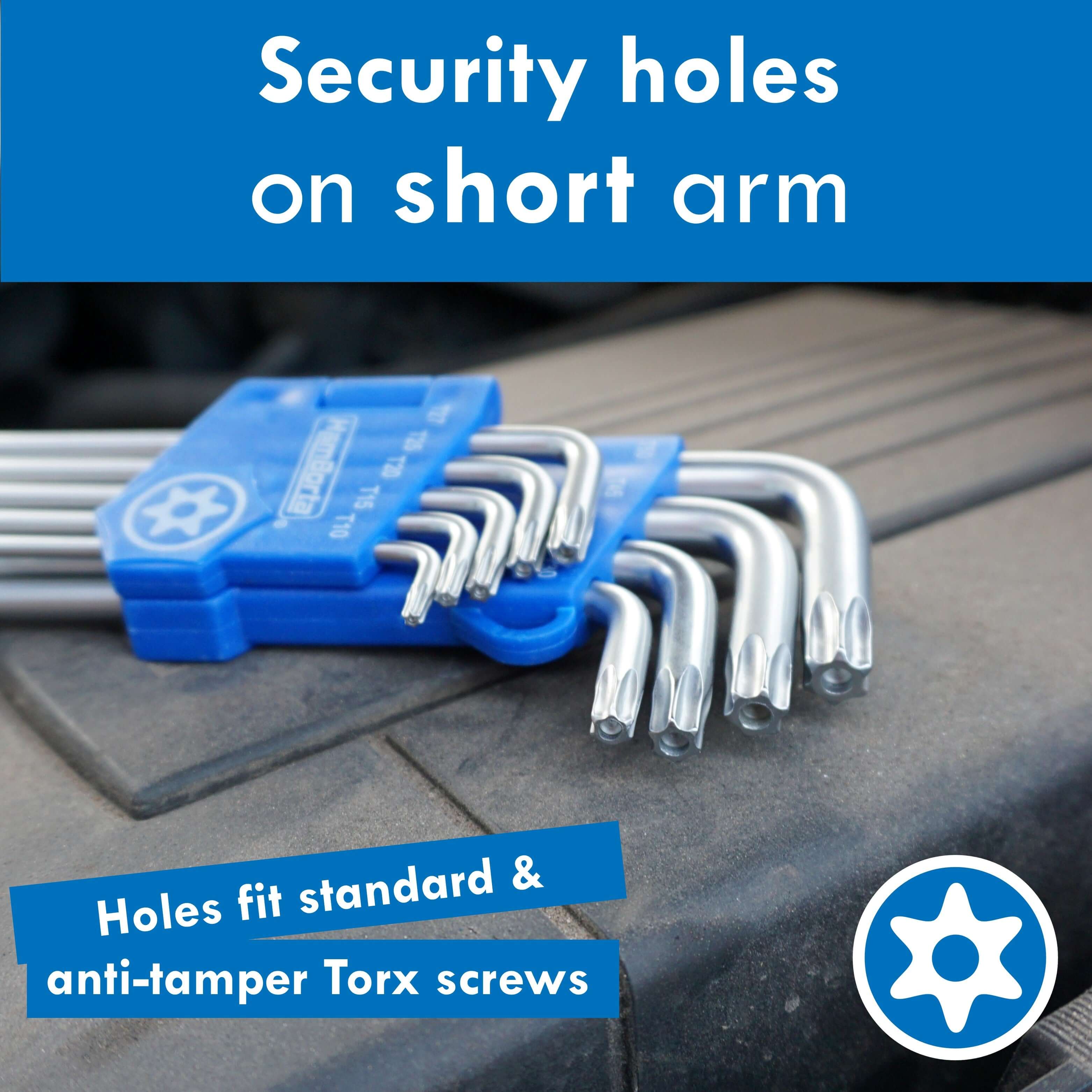
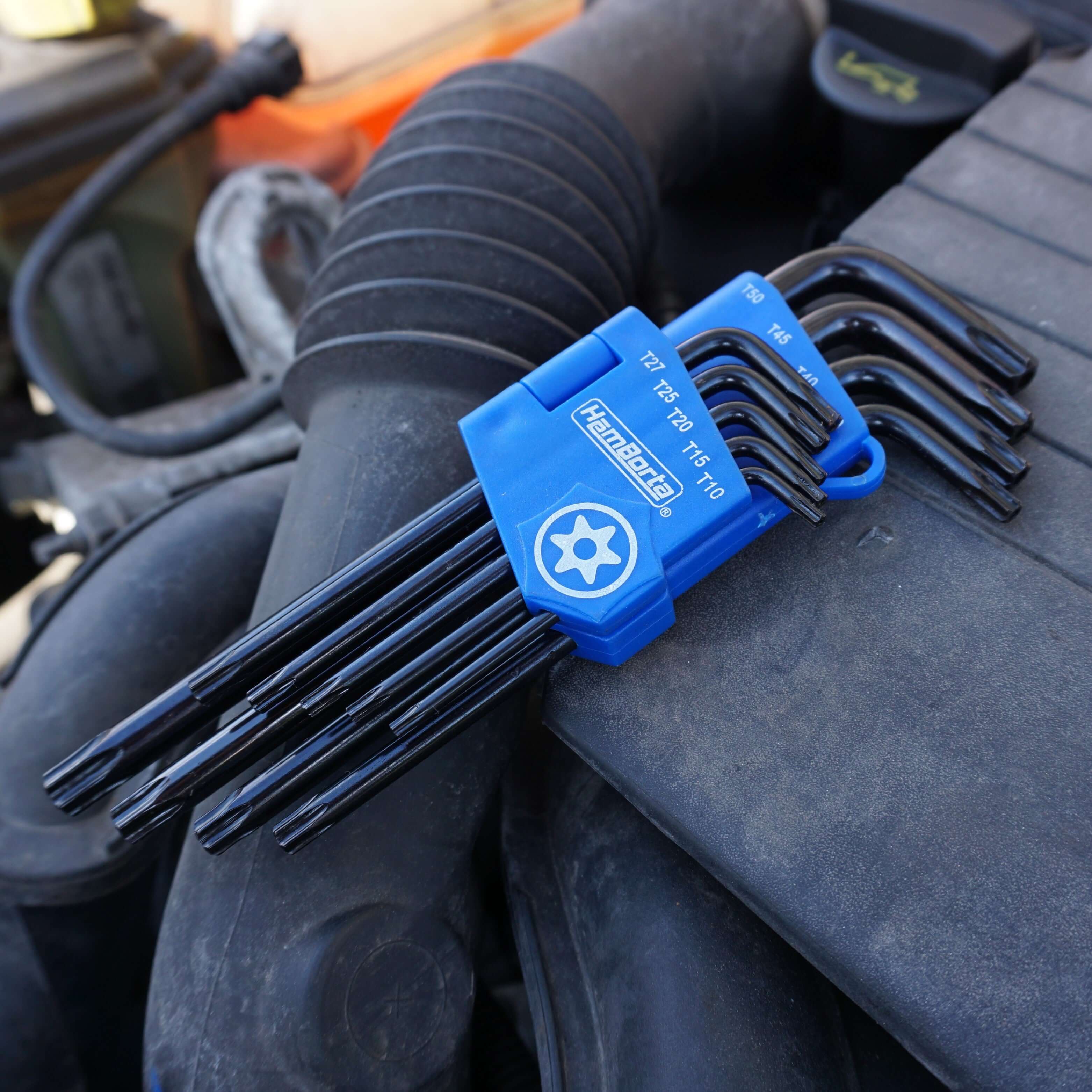
The classic rescue. A Torx star profile one size larger than the ruined hex socket, tapped in with a hammer, cuts its six lobes into the rounded walls and grips where flats cannot. The pairings that work: T27 into a rounded 5mm, T30 into a 5.5mm or worn 6mm, T40 into a rounded 7mm or light 8mm, T45 into an 8mm, T50 into a 10mm. Use a key you are willing to sacrifice, wear eye protection when striking hardened steel, drive it fully home, then turn with steady pressure on the short arm. This works so often it is worth keeping an older Torx key set in the drawer for exactly this duty.
Method 4: grip it from outside
If the bolt has a protruding head, stop fighting the socket. Quality locking pliers clamped hard across the head flats, or a small pipe wrench, will turn what no key can. File two flats onto a round head if the pliers slip. This ruins the head's appearance and saves the day.
Method 5: heat, if threadlocker is suspected
Blue or red threadlock is common on machine and bicycle fixings, and it is heat-sensitive. A soldering iron held on the bolt head for a minute, or careful hot-air, softens the compound dramatically. Combine with methods 1-3. Keep flames away from anything painted, plastic or flammable, and never heat near fuel lines.
Method 6: extractors and left-hand drills
Screw extractors bite a drilled pilot hole with a reverse taper and turn the bolt out; left-hand drill bits often spin the bolt free during the drilling itself. Centre-punch the middle of the socket, drill slow and straight, and use the extractor gently - a snapped extractor is hardened steel that no ordinary drill will touch, and it converts a bad day into a machine-shop visit.
Method 7: drill the head off
The last resort that always works. Drill into the socket with a bit matching the bolt's shank diameter until the head separates; the part lifts free, and the remaining stub - now under no clamping tension - usually turns out with pliers or a stud extractor. Threads survive if you drill straight and stop at the join.
Prevention: why sockets round, and the habits that stop it
Every method above is a tax on one of five avoidable causes:
The almost-right size. A 5.5mm socket met by a set that jumps 5mm to 6mm gets the 5mm forced into it. Sets that include the 3.5mm, 4.5mm and 5.5mm half sizes remove the temptation entirely.
The wrong system. A metric key in an imperial socket sits loose, slips under torque and rounds it - see method 2 in reverse. Match the system to the machine.
Torque through the ball end. The ball exists for angled access, not final tightening - it contacts less of the socket and either rounds the screw or snaps the ball. Reach with the ball, tighten with the short arm.
Partial insertion. A key engaged halfway drives on half the depth and shears the top of the socket. Chamfered tips seat fully and easily; dirty sockets should be cleaned first.
Worn or soft keys. A rounded key rounds sockets. Heat treated chrome vanadium keys hold their corners for years; keys that came free with furniture do not. Retire any key with visibly rounded tips - it is cheaper than everything on this page.
Frequently asked questions
Will pliers on the key help? Extra leverage on a slipping key usually finishes the socket off. Add pressure into the bolt, not torque around it, before adding leverage.
Does the rubber band trick work? On light-torque screws only - a wide band pressed between key and socket can add just enough friction for electronics and trim screws. It will not rescue anything torqued properly.
The bolt is stainless and everything slips - now what? Stainless is soft and galls; escalate to the Torx method early rather than polishing the socket rounder with repeated hex attempts.
HemBorta Allen key and Torx key sets are available on Amazon; each product page on this site links straight to the listing for your marketplace.